 blog
Hiring an Executive Leadership Coach: A Practical Guide
Table of Contents
- Why Executive Leadership Coaching Matters
- Questions to Ask an Executive Coach Before Hiring
- Executive Coaching Goals and Examples That Drive Results
- How Long Does Executive Coaching Take: Setting Realistic Engagement Length
- Measuring Executive Coaching ROI: How to Know It's Working
- The Rhythm Leadership Approach: Why One-Off Training Doesn't Stick
- Finding the Right Coach-Client Fit
- Frequently Asked Questions
Last Updated: October 17, 2026
Why Executive Leadership Coaching Matters
The gap between self-perception and reality is often where leaders get stuck. An executive might believe they're communicating clearly, building trust, and making sound strategic decisions, while their team experiences something entirely different. That disconnect costs organizations in engagement, retention, accountability, and business results.
This is where an executive leadership coach becomes invaluable. A coach isn't there to fix you or tell you what to do. A good coach creates space for you to see yourself more clearly, challenge your assumptions, and develop new leadership rhythms that actually move the needle.
Awareness without application, accountability, and reinforcement rarely produces lasting change. Coaching works differently. It's personal, it's ongoing, and it's designed to shift how you actually show up, not just what you know.
The investment in an executive leadership coach pays dividends when the focus is on sustainable behavior change: how you lead yourself, how you lead others, and how you lead your organization at a higher level.
Questions to Ask an Executive Coach Before Hiring
Before you commit to working with a coach, you need to know who you're working with and whether the fit is right. The right questions separate coaches who will challenge you meaningfully from those who simply validate what you already believe.
Vetting Credentials and Experience
Start by understanding their background. Ask directly: What's your training in coaching? Do you have formal certification? What's your experience working with executives at your level?
Legitimate coaches have formal training, whether through the International Coach Federation or similar credible bodies. That matters because it signals they understand coaching methodology, not just business advice. Experience matters more than credentials alone. A coach who has worked with C-suite leaders in your industry brings insights that a generalist cannot.
Ask about their background before coaching. Did they lead organizations? Work in your sector? Understand the pressures you face? Dr. Terry Daniels brings more than 30 years of HR and organizational leadership experience alongside his coaching practice. That context shapes how he works with executives navigating complex leadership transitions and organizational challenges.
Ask about their approach to confidentiality and how they handle sensitive situations. You need to know your conversations stay private and that the coach understands the political landscape of senior leadership.
Understanding Their Coaching Philosophy
This is where you discover whether their approach aligns with your needs. Ask: What's your coaching methodology? How do you structure our work together?
Listen for coaches who talk about sustainable behavior change, not quick fixes. Avoid anyone promising transformation in a few sessions. Real leadership development requires consistent practice, accountability, and reinforcement over time.
Ask how they measure progress. Do they use assessments? 360-degree feedback? How will you know the coaching is actually working? A coach who can't articulate how success looks is flying blind.
Inquire about their philosophy on feedback and challenge. Will they tell you what you need to hear, or just what you want to hear? The best coaches ask tough questions and create space for you to think differently, not because they're being difficult, but because that's where real growth happens.
Ask whether they work with your organization or independently. Some coaches are embedded in your company; others work as external partners. Each has trade-offs. External coaches often provide more candor because they have no political stake in your company's dynamics.
Executive Coaching Goals and Examples That Drive Results
Effective coaching starts with clarity about what you're trying to accomplish. The best goals connect to business outcomes, not just feel-good improvements.
Common coaching goals include strengthening strategic thinking and decision-making. An executive might work with a coach to think more systemically about organizational challenges, consider longer-term implications, and move beyond reactive problem-solving. That shift in thinking often leads to better decisions and stronger team confidence.
Another frequent goal is developing leadership presence and communication effectiveness. This isn't about charisma. It's about how you show up in meetings, how you listen, how you respond to challenge, and whether people feel heard and respected. A coach helps you identify patterns that undermine your presence, defensiveness, over-explaining, not making space for others, and develop new habits.
Executive transitions generate coaching needs. A leader moving into a larger role, managing a new team, or navigating organizational change benefits from a coach who helps them understand the new landscape, build credibility quickly, and avoid common pitfalls. The coaching accelerates their effectiveness in the new position.
Emotional intelligence and self-awareness are foundational. Many executives operate on autopilot, reacting to stress the way they always have, making decisions without examining their own biases, or not recognizing how their mood affects their team. Coaching creates the awareness and tools to manage yourself more intentionally.
Some leaders seek coaching to improve accountability and culture. If your organization struggles with follow-through, unclear expectations, or people avoiding difficult conversations, coaching can help you model different behaviors and establish new rhythms of accountability that ripple through your team.
How Long Does Executive Coaching Take: Setting Realistic Engagement Length
There's no universal timeline because coaching depends on your starting point, your goals, and how committed you are to change.
Many executives engage with a coach for 6 to 12 months. That's a realistic window for meaningful behavior change. A year gives you time to practice, refine, and internalize changes so they stick after coaching ends.
Some leaders work with a coach for shorter intensive periods, focused on a specific challenge like a leadership transition or a critical decision. That works when the goal is narrowly defined and time-bound.
Longer engagements happen when the work is deeper. An executive rebuilding their leadership approach after a difficult period, or developing themselves for a significantly larger role, may benefit from extended partnership.
Frequency matters as much as duration. Monthly sessions spaced too far apart lose momentum. Most effective coaching involves bi-weekly or monthly sessions, sometimes combined with shorter check-ins. The rhythm of regular contact, intentional, focused time, is what creates sustainable change.
Ask a prospective coach about their typical engagement length and why. A coach who sizes the engagement to your actual needs, rather than a preset package, shows they're thinking about your success, not their revenue.
Measuring Executive Coaching ROI: How to Know It's Working
This is the question every leader and every organization should ask: How do I know this investment is paying off?
Start with a baseline. Before coaching begins, define what success looks like. Are you trying to improve team engagement scores? Strengthen decision-making speed? Build stronger peer relationships? Develop your ability to handle conflict? Be specific.
Use 360-degree feedback before coaching starts and again at 6 or 12 months. This gives you data on how others perceive your leadership. It's often eye-opening because self-perception diverges from reality. If your goal is to improve communication, the 360 will show whether your team actually experiences you as more open, clearer, or more accessible.
Track business outcomes tied to your development. If you're coaching to improve team retention, look at your turnover data. If you're working on strategic thinking, examine the quality of decisions and their outcomes over time. If you're building accountability, measure whether commitments are being met and follow-through improves.
Pay attention to behavioral shifts. Are you asking better questions in meetings? Listening more than defending? Making decisions faster? These observable changes often precede measurable business results, but they signal the coaching is working.
Ask your coach how they'll help you measure progress. Good coaches build accountability into the engagement. They'll ask you what success looks like and revisit that regularly. They'll challenge you on whether you're actually applying what you're learning or just gaining awareness.
Remember: coaching is not about feeling better. It's about performing better. The ROI shows up in how you lead, how your team responds, and what your organization achieves.
The Rhythm Leadership Approach: Why One-Off Training Doesn't Stick
Here's what most organizations get wrong about leadership development: they treat it as an event. A two-day workshop. A keynote speech. A training program. Leaders attend, feel inspired, maybe take some notes, and then return to their old patterns because nothing in their daily environment reinforces the new approach.
This is why awareness without application rarely produces lasting change.
The Rhythm Leadership approach is built on a different premise: sustainable leadership effectiveness comes from intentional, repeated behaviors, rhythms. Every interaction has a beat. How you show up in a one-on-one conversation, how you respond to conflict, how you make decisions, how you hold people accountable, these repeated patterns either strengthen your leadership or undermine it.
Coaching works because it embeds accountability and practice into your actual leadership life. You're not learning in a classroom. You're working on real situations with real stakes. Your coach helps you see patterns you've been blind to, try new approaches, and practice them until they become natural.
The rhythm builds over months. You have a coaching conversation. You apply what you learned in your next leadership interaction. You report back. You refine. You practice again. That cycle, awareness, application, accountability, reflection, is what creates durable change.
One-off training can't do that. It's not designed to. But when coaching is part of your leadership rhythm, it becomes part of how you think and act.
| Approach | Frequency | Accountability | Behavioral Change | Sustainability |
|---|---|---|---|---|
| One-time training | Single event | None | Temporary awareness | Low, fades without reinforcement |
| Coaching engagement | Bi-weekly or monthly | Built in | Intentional practice | High, becomes embedded habit |
| Self-directed learning | Sporadic | Self-imposed | Inconsistent | Low, requires exceptional discipline |
Finding the Right Coach-Client Fit
Chemistry matters. You're going to have candid conversations with this person about your challenges, your blind spots, and your aspirations. You need someone you trust and someone whose style resonates with you.
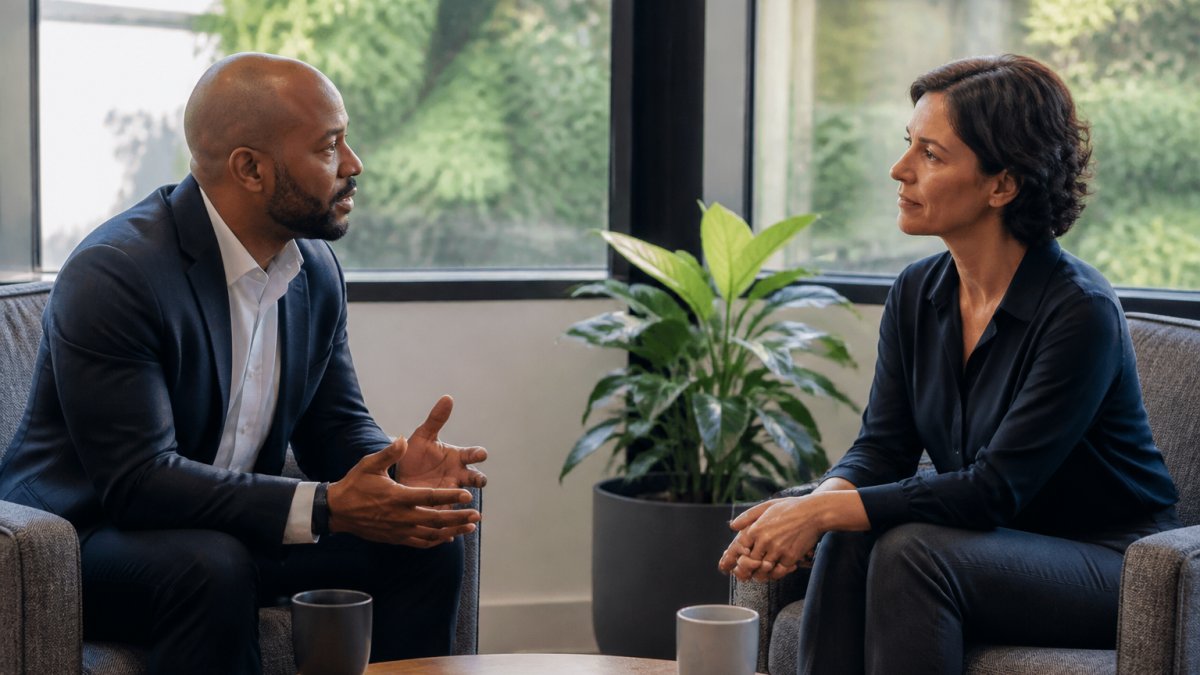
Request a chemistry call before committing. A good coach will offer this. Use it to ask questions, get a sense of how they work, and notice whether you feel heard and respected.
Pay attention to how they listen. Do they jump to advice, or do they ask questions that make you think? Do they interrupt, or do they create space for you to fully express your thinking?
Ask how they handle disagreement. Will they challenge you when they think you're off track? Will they speak directly if they see a pattern that's limiting you? The best coaches are honest partners, not yes-men.
Consider their industry or sector experience. A coach who understands manufacturing leadership, or healthcare, or technology brings context that matters. They understand the pressures, the culture, the decision-making environment.
Trust your instinct. If something feels off in the conversation, it probably will in the coaching relationship too. You're looking for someone who is competent, trustworthy, and someone you actually want to work with.
Hiring an executive leadership coach is one of the highest-ROI investments a leader can make, but only if you choose someone who understands that sustainable change requires more than awareness.
Frequently Asked Questions
What should you ask an executive coach before hiring them?
Ask about their coaching credentials, experience with leaders at your level, their methodology, how they measure progress, confidentiality practices, and their approach to accountability. Request examples of how they've helped executives with similar challenges. A strong coach will ask you equally probing questions about your goals, leadership context, and what success looks like. The conversation should feel like a mutual assessment, not a sales pitch.
How do you measure the ROI of executive coaching?
Define specific outcomes before coaching begins: improved decision-making speed, stronger team engagement, better strategic communication, or increased leadership presence. Track these through 360-degree feedback, business metrics tied to your role, team surveys, or self-assessment. Sustainable behavior change typically takes 6-12 months of consistent practice. The real ROI appears when your leadership rhythm shifts and those changes stick.
How long does executive coaching usually take?
Most executive coaching engagements run 6 to 12 months with regular one-on-one sessions. Some leaders benefit from shorter, intensive periods, while others prefer longer engagement for deeper transformation. The length depends on your goals, the complexity of the challenges you're facing, and your commitment to applying what you learn. Coaching without practice and accountability rarely produces lasting results, so engagement length matters less than consistency.
What's the difference between executive coaching and leadership training?
Leadership training is typically one-off or episodic, a workshop or program delivered to a group at a point in time. Executive coaching is personalized, ongoing, and focused on your specific situation, goals, and behavior change. Coaching includes accountability, feedback, practice, and reinforcement over time. That's why coaching produces sustainable results while training alone often fades. Real leadership development requires rhythm, not just awareness.