 blog
Benefits of Organizational Leadership Coaching
Table of Contents
- Why Organizational Leadership Coaching Matters
- Building Self-Awareness and Emotional Intelligence
- Strengthening Decision-Making and Strategic Thinking
- Leadership Coaching Examples That Drive Real Change
- How Leadership Coaching Improves Team Communication and Accountability
- Leadership Coaching Best Practices for Sustainable Results
- Measuring Leadership Coaching ROI and Organizational Impact
- Why One-Off Training Falls Short
- Frequently Asked Questions
Last Updated: October 9, 2026
Why Organizational Leadership Coaching Matters
Most organizations invest in leadership training once a year and expect lasting change. A workshop happens. People feel motivated for a few weeks. Then everything reverts.
That's the problem with isolated events. They create awareness without accountability. They build excitement without reinforcement. They lack the rhythm needed to sustain real transformation.
Organizational leadership coaching is fundamentally different. It's not a one-time event, it's a sustained partnership designed to help leaders think differently, act differently, and lead differently over time. According to research on executive development, leaders who engage in structured coaching show measurable improvements in decision-making and team engagement, while those who rely only on training often see minimal lasting change.
Many leaders across industries come to coaching skeptical. They'd tried training before. They'd read books. They'd attended conferences. What they needed was something different: someone to help them translate awareness into consistent behavior, to hold them accountable for change, and to help them understand why old patterns persist even when they know better.
That's where coaching works. Not because it's magic, but because it addresses what training doesn't: the gap between knowing what to do and actually doing it, day after day, in real situations with real pressure.
Building Self-Awareness and Emotional Intelligence
You can't change what you don't see.
Most leaders think they know how they come across. They think they listen well. They think they're approachable. Then they get feedback that contradicts their self-image, and the gap between perception and reality becomes clear.
Self-awareness is where meaningful leadership change begins. It's the foundation. Without it, all the techniques and strategies in the world won't stick because leaders don't see why they need to change.
Coaching creates the space for honest self-reflection. A skilled coach asks questions that help you see patterns you've been blind to. Why do your best people keep leaving? Why does your team hesitate to bring you bad news?
Emotional intelligence, the ability to recognize and manage your own emotions and understand others' emotions, directly impacts how you lead. Leaders with strong emotional intelligence make better decisions under pressure. They build trust faster. They navigate conflict more effectively.
Coaching helps you develop emotional intelligence by creating awareness of your triggers, your default responses, and the impact those responses have on others. You learn to pause before reacting. You learn to read the room.
This isn't therapy. It's practical work on the skills that determine whether people want to follow you.
Strengthening Decision-Making and Strategic Thinking
Leadership is a series of decisions.
Some are tactical. Some are strategic. Some have immediate consequences. Others ripple through the organization for years.
The quality of your decisions determines the trajectory of your team and organization. Yet most leaders make decisions the same way they always have, based on pattern recognition, intuition, and what worked last time.
Strategic thinking requires stepping back from the immediate and seeing the broader landscape. It requires asking different questions. What are we not seeing? What assumptions are we making? What would change if we approached this differently?
Coaching helps you develop more rigorous thinking habits. A good coach doesn't tell you what to do. They ask questions that expand your perspective. They challenge your assumptions. They help you see trade-offs you hadn't considered.
This is where organizational leadership coaching creates real value. Leaders who work with coaches develop better judgment. They make fewer reactive decisions. They consider more options. They involve the right people in decisions instead of deciding in isolation.
The result isn't just better individual decisions. It's a more thoughtful leadership culture where strategic thinking becomes a shared discipline rather than something only a few people do.
Leadership Coaching Examples That Drive Real Change
Real change looks different than you might expect.
It's not dramatic. It's not a sudden breakthrough moment. It's subtle shifts in how a leader shows up, and how the organization responds.
Consider a manufacturing executive who might come to coaching frustrated because their team isn't executing, projects are late, and communication is poor. They might initially blame the team for a lack of commitment.
Through coaching, they might discover that the team is confused about priorities due to inconsistent direction, or that they hesitate to communicate bad news because of past reactions.
The coaching work would then focus on the leader changing how they communicate strategy, how they respond to problems, and how they foster psychological safety for their people to speak up.
This approach to organizational leadership coaching helps leaders become a more effective version of themselves, understanding their impact and adjusting their approach based on what's actually happening, not what they assume is happening.
Another example might be a senior leader who is technically brilliant but struggles with executive presence.
Coaching can help leaders explore the roots of such behaviors, whether they stem from old beliefs or ingrained habits.
When leaders commit to coaching and do the work, their presence can shift, leading to increased influence and career acceleration.
How Leadership Coaching Improves Team Communication and Accountability
A leader's communication sets the tone for the entire organization.
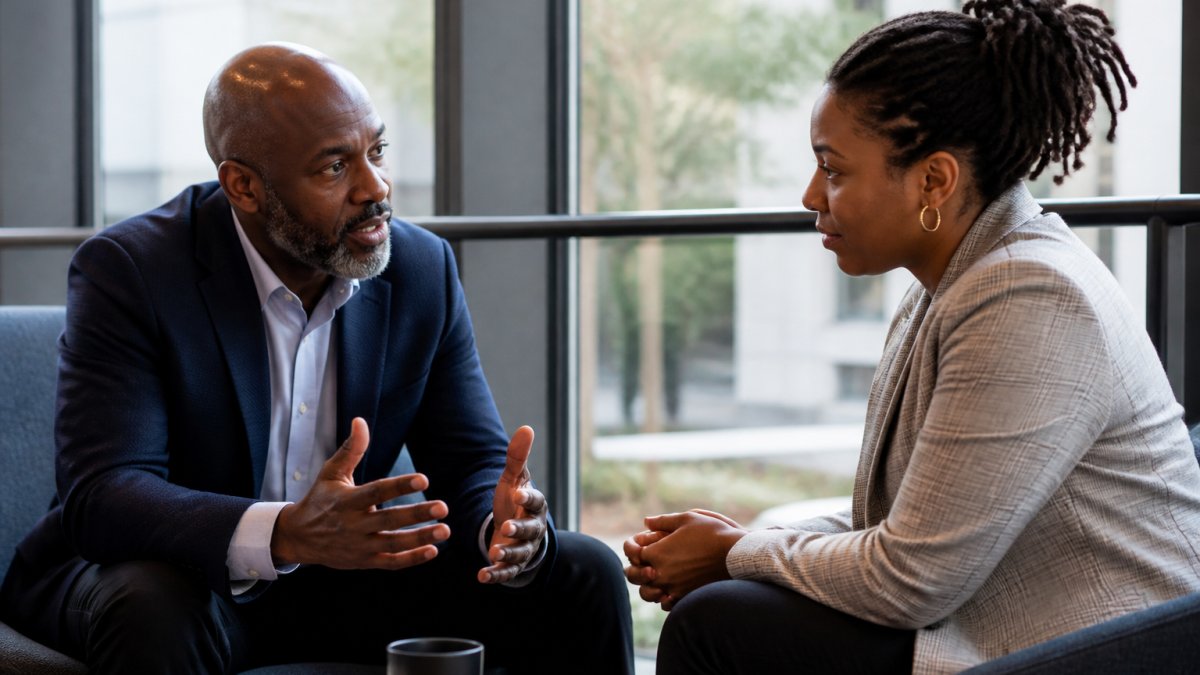
If you communicate unclearly, your team operates in confusion. If you avoid difficult conversations, problems fester. If you don't follow through on commitments, trust erodes.
Coaching helps leaders develop communication rhythms that work. Not one-time conversations, but consistent patterns of how you check in, how you give feedback, how you listen, how you hold people accountable.
Many leaders avoid difficult conversations because they're uncomfortable. They don't know what to say. They're afraid of the reaction. So problems go unaddressed. Performance doesn't improve. Resentment builds.
A coach helps you develop the skills and confidence to have these conversations. You practice. You get feedback. You learn what works.
Accountability is where coaching creates visible organizational impact. Leaders who've done coaching work are clearer about expectations. They follow up consistently. They connect actions to consequences.
This creates a culture where people know what's expected. Where poor performance gets addressed. Where good performance gets recognized. Where people know where they stand.
It sounds simple. It's not. It requires discipline. It requires consistency. It requires the willingness to have uncomfortable conversations. But once a leader establishes this rhythm, the entire team functions differently.
Leadership Coaching Best Practices for Sustainable Results
Coaching only works if it's approached strategically.
Too many organizations treat coaching like a perk or a punishment. They assign it to someone struggling without clear goals. Or they offer it to high performers as a reward.
Here's what actually works:
Start with clarity. What specific leadership challenges are you addressing? Is it executive presence? Strategic thinking? Delegation? Team dynamics? The clearer the focus, the better the results.
Commit to the timeline. Real change takes time. Most meaningful coaching engagements run 6 to 12 months with regular sessions. Quick fixes don't exist in leadership development.
Make it safe. Coaching requires honesty. Leaders need to know that what they share with their coach stays confidential. They need to feel safe exploring their vulnerabilities and blind spots.
Connect it to business outcomes. What will be different if this coaching is successful? How will it show up in performance? In team engagement? In retention? Define success clearly upfront.
Create accountability. A coach isn't there to be nice. They're there to help you change. That requires being willing to be challenged. It requires following through on commitments between sessions.
Reinforce the learning. Coaching creates insights. But insights don't change behavior by themselves. You need to practice new approaches. The rhythm of practice and adjustment is what creates lasting change.
Organizations that get the best results from coaching treat it as a strategic investment in their leadership pipeline, not an isolated intervention for someone in trouble.
Measuring Leadership Coaching ROI and Organizational Impact
Here's the question every CFO asks: How do we know this is working?
It's a fair question. Coaching requires investment. Leaders need time. There's a cost. So what's the return?
The honest answer: it depends on what you measure and how well you measure it.
Individual-level metrics are easier to track. Did the leader's 360-degree feedback improve? Did their direct reports rate them higher on key competencies? Did their promotion timeline accelerate?
Team-level metrics show broader impact. Did engagement scores improve? Did turnover decrease? Did project delivery improve? Did customer satisfaction increase?
Organizational-level metrics connect to business outcomes. Did revenue grow? Did profit margin improve? Did market share increase?
The challenge is isolating coaching's impact from everything else happening in the business. A leader might improve, but the market might also improve.
What organizations can measure is change in the right direction. Leaders who engage in coaching typically show measurable improvements in:
- How their teams rate them on key leadership competencies
- Employee engagement and retention
- Decision-making speed and quality
- Project delivery and execution
- Communication effectiveness
These aren't abstract measures. They're concrete behaviors and outcomes that matter to the business.
The real ROI comes from understanding that leadership effectiveness drives organizational results. Better leaders make better decisions. They attract and retain better talent. They build stronger cultures. They execute strategy more effectively.
Coaching accelerates that development. It's an investment in the quality of your leadership, which is an investment in the quality of your organization.
Why One-Off Training Falls Short
Here's what happens with traditional leadership training:
Day one of the workshop, people are engaged. They take notes. They have insights. They feel motivated.
By day three, they're back at work. Emails are piling up. Fires are burning. The workshop feels like a nice break, but it's not connected to the real work they do every day.
Two weeks later, they've reverted to their old patterns. The training fades into the background.
Why? Because awareness without accountability doesn't create change. Because a two-day event can't compete with the daily rhythms and habits that have been ingrained for years.
Training creates knowledge. It doesn't create behavior change.
Sustainable behavior change requires something different. It requires:
- Clear goals and accountability
- Regular practice and feedback
- Someone helping you navigate obstacles
- Reinforcement over time
- Integration into your actual work
That's what coaching provides. It's not a one-time event. It's an ongoing partnership focused on helping you translate awareness into action, insight into behavior, and behavior into results.
The leaders who've done the most meaningful development work understand this. They don't expect a workshop to change them. They expect a sustained commitment to their own growth. They expect to be challenged.
And they expect that change to be hard, but worth it.
Leadership effectiveness isn't built in a workshop or created by reading a book.
If you're looking to strengthen your leadership effectiveness, your team's performance, or your organization's culture, executive coaching has been shown to improve leadership competencies and organizational outcomes when approached strategically.
Dr. Terry Daniels | The Rhythm Coach specializes in organizational leadership coaching designed to create sustainable behavior change. We work with executives and senior leaders to build the self-awareness, emotional intelligence, and leadership rhythms that drive real results. Start a conversation with Dr. Terry Daniels to explore how coaching can strengthen your leadership and your organization.
Frequently Asked Questions
What are the key benefits of organizational leadership coaching?
Organizational leadership coaching builds self-awareness, emotional intelligence, and decision-making capability while strengthening team communication, accountability, and employee engagement. Leaders develop sustainable behavioral change through intentional practice and reinforcement, not isolated training events. The result is improved organizational performance, stronger leadership presence, better strategic alignment, and measurable improvements in retention and team dynamics.
How is leadership coaching different from traditional training programs?
Traditional training often delivers awareness in a single session, but awareness without application, accountability, and practice rarely sticks. Leadership coaching is ongoing, personalized, and focused on behavioral change. A coach works with you over time to identify patterns, challenge assumptions, reinforce new behaviors, and hold you accountable to your commitments. This rhythm of intentional practice produces lasting transformation that one-off workshops cannot achieve.
How do you measure the ROI of leadership coaching?
Effective measurement includes both leading and lagging indicators. Leading indicators track behavioral change: feedback from direct reports, peers, and supervisors; frequency of one-on-ones; quality of decision-making conversations. Lagging indicators measure organizational impact: employee engagement scores, retention rates, team performance metrics, promotion readiness, and strategic initiative success. The strongest ROI stories connect improved leadership rhythm directly to business outcomes like reduced turnover, faster decision velocity, or stronger team accountability.
Can leadership coaching help at senior levels, or is it mainly for emerging leaders?
Coaching is equally valuable at every level. Senior leaders often struggle with blind spots that have been reinforced over decades, leadership patterns that once worked but now limit effectiveness. Executive coaching helps seasoned leaders strengthen strategic thinking, executive presence, emotional intelligence, and decision-making in complex situations. The depth and focus simply shift based on the leader's experience and the organization's needs.